Getting Irrigation Right in a Dry Valley
A well-planned irrigation system saves water and plants alike, and most problems come down to a few parts you can identify yourself.
October 6, 2026 · 4 min read
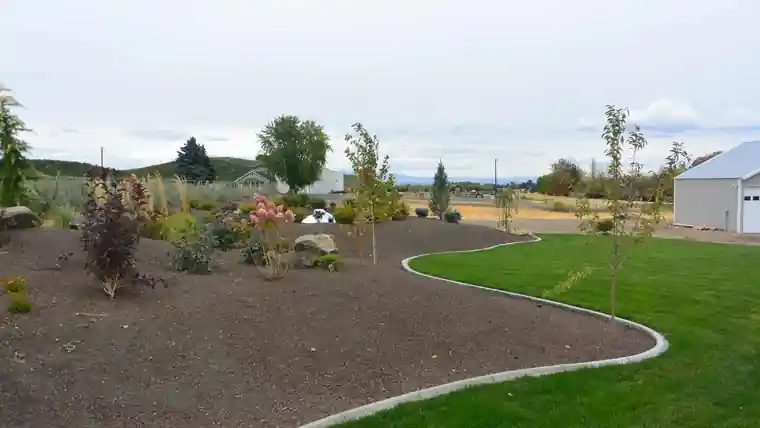
In a valley where summers run dry and plants depend on the water you give them, irrigation isn't a nice extra. It decides if a lawn stays green, if new trees survive their first hot season, and how your water bill looks in August. The good news is that most systems are just a handful of parts working together, and once you know what they do, troubleshooting gets much easier.
The parts and what they do
Our irrigation supplies page lists a complete line of products for residential and commercial use. Here's a plain-language tour of the main pieces:
- Timers (controllers) decide when each zone runs and for how long.
- Electric valves open and close to send water to one zone at a time.
- Valve boxes are the green lids in the lawn that protect the valves underneath.
- Heads and nozzles spray the water, and different types cover different areas.
- PVC pipe and fittings carry the water from the valves out to the heads.
- Drip irrigation supplies deliver water slowly right to the roots.
- Double checks and backflow prevention devices keep irrigation water from flowing backward into the household supply.
Think in zones
The biggest improvement most people can make is grouping plants by how much water they need. A lawn drinks differently than a perennial bed, and a bed drinks differently than a young tree. When everything shares one zone, something is always too wet or too dry. Separate zones for lawn, beds and trees let you give each one what it needs and nothing more.
Sun matters, too. A zone on a hot south-facing slope will want more water than a shady spot behind the house, even if the plants look alike. Adjust your timer as the season changes instead of leaving it on one setting from spring through fall.
Spray, rotor or drip
Spray heads and nozzles are common on lawns and small areas, and they work best when the spray patterns overlap and don't hit the sidewalk or the fence. For planting beds, shrubs and trees, drip irrigation is hard to beat in a dry climate. It puts water where roots can use it and wastes far less to wind and evaporation. Drip lines also keep leaves dry, which is a plus for plants that don't like wet foliage.
New trees especially benefit from drip or a slow soak. A slow, deep watering encourages roots to grow downward, where the soil holds moisture longer, instead of staying shallow near the surface.
When to water
Early morning is usually the best window. Winds are lighter, temperatures are cooler and the plants have water on hand for the heat of the day. Watering in the middle of a hot afternoon loses a lot to evaporation. Water deeper and less often rather than a little every day, since that builds stronger roots.
Check your zones in person a couple of times each season. Run each one and walk the yard. Look for heads that are buried in grass, tilted over, clogged or spraying the wrong direction. Those small fixes solve a surprising number of brown patches.
Troubleshooting at the counter
If something has gone wrong, you don't need to know the answer before you ask. A zone that won't turn on might be a valve, a wire or the timer. A geyser in the lawn is usually a broken head or a cracked fitting. A zone that's weak could have a clogged nozzle or a leak somewhere along the line. Bring the broken part in a bag, or take a photo of the box and the timer, and we'll help you work out what you need.
If the project is bigger than a part swap, our landscape crew can help with irrigation repairs as well as planting trees. That's convenient when a system change is part of a bigger yard project.
Winter and backflow
Cold winters are hard on irrigation. Before a hard freeze, shut off the water supply to the system and drain the lines the way your system's manufacturer or installer recommends. Exposed pipes and backflow devices are the parts most at risk, and a cracked one is a miserable surprise in spring.
Backflow devices also come with rules from your water provider, which can include testing or installation requirements. Because those rules vary, check with your provider about what applies at your address. We can show you the double checks and backflow prevention devices we carry, but the requirements themselves are theirs to explain.
Whenever you hit a snag, stop by 6710 Tieton Dr. with your questions and the parts in hand. You can also call (509) 966-0698 and talk it through before you make the trip.
Roots Nursery & Landscape, (509) 966-0698
Call (509) 966-0698More articles
Choosing a Shade Tree for Your Yakima Yard
A shade tree pays you back for decades, so it's worth choosing the right one for the right spot before anything goes in the ground.
Spring Color for Your Porch: What to Plant, and When
Early color goes in first and summer color follows once the nights warm up, and a good porch pot can carry both.