Choosing a Shade Tree for Your Yakima Yard
A shade tree pays you back for decades, so it's worth choosing the right one for the right spot before anything goes in the ground.
October 6, 2026 · 4 min read
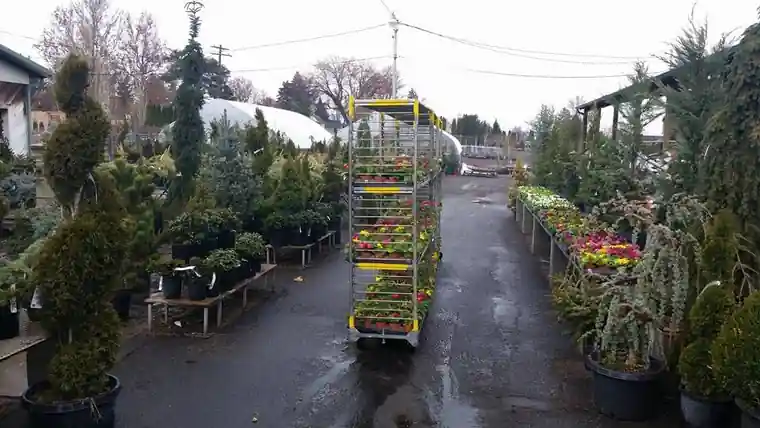
Planting a shade tree is one of the few yard decisions that keeps paying you back for decades. It's also one of the easiest to get wrong, because a five-foot tree in a nursery row tells you almost nothing about the tall, wide tree it's going to become. Here's how we'd think it through if you walked into Roots with a hot, bare spot in the yard and a hope for cooler afternoons.
Start with the spot, not the tree
Before you look at a single tree, stand in the yard on a hot summer afternoon. Notice which windows and patio chairs take the worst of the sun, and where you'd really like shade to land. The west and southwest sides of a house are usually the hardest hit, so a tree there earns its keep fast.
Then look up and down. Overhead power lines limit how tall a tree can get before somebody has to hack at it. Underground, sewer and water lines, sprinkler pipes and the foundation all argue for planting farther from the house than feels natural. Picture the mature canopy, not the sapling, and give it room on every side. Most of the unhappy trees we hear about at the counter were planted too close to something.
Read the tag twice
Every tree tag lists a mature height and spread, and those numbers are worth a second look. A tree with a big spread wants open lawn, not a narrow side yard. If your space is tight, ask about medium-sized shade trees and ornamental trees, which cast lighter shade but fit smaller lots. Tony, Jason and Bryan, our tree specialists, answer this question every week, and they'd rather steer you to the right size than sell you the wrong one.
Think about roots and growth speed, too. Fast growers give shade sooner, but they can have weaker wood that suffers in wind or heavy snow. Slower growers often hold up better over the long haul. Neither choice is wrong. It comes down to wanting shade in five years or a tree that's still standing in fifty.
Deciduous, evergreen, or something in between
A deciduous shade tree drops its leaves in fall, which is exactly what you want beside the house: it blocks summer sun and lets winter light back in. Evergreens hold their needles all year, so they make better windbreaks and privacy screens than they do patio shade. Ornamental trees, like the oriental spirals and pom pom shapes on our trees page, are more about structure and form than deep shade. They make a strong focal point near an entry.
If fruit is on your mind, we stock fruit trees too, including peach, apple, cherry and pear. A fruit tree can shade a small seating area, but plan on picking up what falls, and give it the full sun it needs to bear well.
Planting it right
Dig the hole wide, not deep. You want a broad, shallow saucer of loosened soil so the roots can spread, with the top of the root ball sitting level with or just above the surrounding ground. Planting too deep is one of the most common reasons a young tree struggles for years. Keep soil and mulch off the trunk flare, the place where the trunk widens at the base.
- Check the roots and loosen any that circle the root ball.
- Set the tree straight before you backfill, and check it from two sides.
- Backfill with the soil you dug out, not a hole full of rich amendment.
- Water slowly and deeply to settle the soil around the roots.
- Add a few inches of bark in a ring, pulled back from the trunk so it doesn't touch.
Big trees are awkward and heavy, and getting one out of the truck and into the hole is where trunks get scraped. That's why we offer delivery and planting. Our crew puts the tree in the ground so you know it isn't damaged in the process of getting it into your yard. Call the store for delivery details.
Aftercare for the first few summers
Valley summers are dry, and the first two or three are the make-or-break ones. A new tree has a small root system and needs regular deep watering even when the lawn beside it looks fine. Soak the root zone slowly, then let the soil breathe before the next watering. Pushing a finger or a screwdriver into the ground tells you more than a fixed schedule does: if it's still damp a few inches down, wait a day or two.
Stake only if the tree really needs it, and take the ties off after a season so they don't cut into the bark. Skip heavy pruning in the first year beyond removing broken branches. If leaves scorch, curl or drop early, bring a sample in. Curling leaves on a fruit tree are a question we hear all the time, and it's something we can often help with right at the counter.
Come walk the rows at 6710 Tieton Dr. and put your hand on a few trunks before you decide. If you'd rather talk first, call (509) 966-0698. A phone photo of the spot you have in mind goes a long way.
Roots Nursery & Landscape, (509) 966-0698
Call (509) 966-0698More articles
Spring Color for Your Porch: What to Plant, and When
Early color goes in first and summer color follows once the nights warm up, and a good porch pot can carry both.
Retaining Walls, Pavers and Fire Pits: How a Hardscape Project Goes
Hardscaping is the permanent bones of a yard, and a little planning up front makes the whole project go smoother.